Featured Project
Looply
A neighbor-to-neighbor borrowing app that grows a green community.
Solo project · UX/UI & Service Design · MDes at MassArt · 2025
Figma
Prototyping
Service Design

01.
Overview
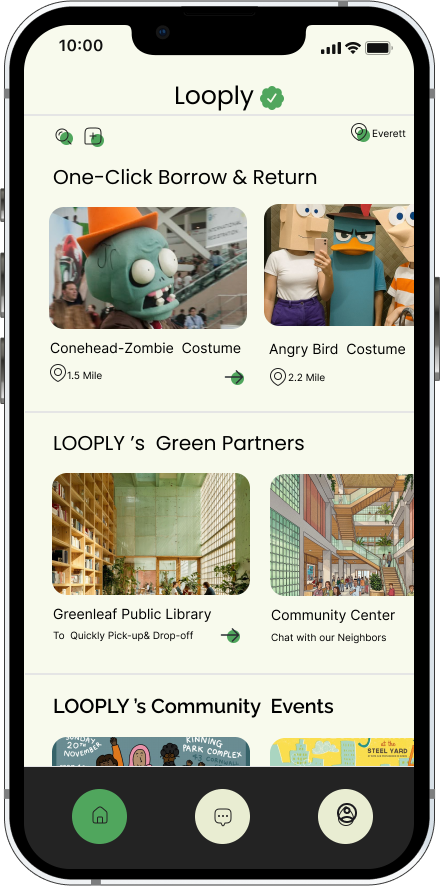
Looply helps neighbors borrow and lend everyday items instead of buying new ones, turning one-off transactions into community relationships and measurable environmental impact. By lowering the social friction of asking a neighbor and making every exchange visible as a shared green score, Looply positions borrowing as the obvious default — not the awkward last resort.
Role
UX/UI & Service Designer
Timeline
[duration]
Tools
Figma, [AI tools used]
Deliverables
Research, user flow, wireframes, design system, high-fidelity prototype
02.
Discover — Understanding how neighbors share
Although it started from a prompt, before designing anything, I wanted to understand why informal borrowing between neighbors so rarely happens, even when everyone owns things they barely use.
What I heard
“I'd rather spend more money than ask someone for a favor.”
— a neighbor
“You can't always be sure about the condition of what you lend out — or what you get back.”
— a peer
“Honestly, ordering online or running to the store is still less convenient than a neighbor just handing it to you.”
— a neighbor
“I'm happy to lend my things to neighbors — I just want them back in one piece.”
— a peer
What it told me
01
The barrier is social, not material — asking feels like a favor with no place for trust to start, so people default to buying.
02
Both sides worry about condition and accountability — lenders want their things back intact, borrowers can't judge quality upfront.
03
The demand is real: when friction is removed, borrowing from a neighbor beats both delivery and the store run.
Key insights
01
People default to buying because asking a stranger feels socially risky — trust must be established before the first request.
02
Negotiating time, place and conditions is the most awkward part of borrowing; unclear norms make people give up.
03
Borrowing only wins over buying when the total cost — time, effort and money — is clearly lower.
03.
Define — Three problems, three questions
Problems
01
It is hard for people to trust each other the first time.
02
People find it challenging to negotiate with others.
03
People struggle to balance time and money cost.
How Might We
1.
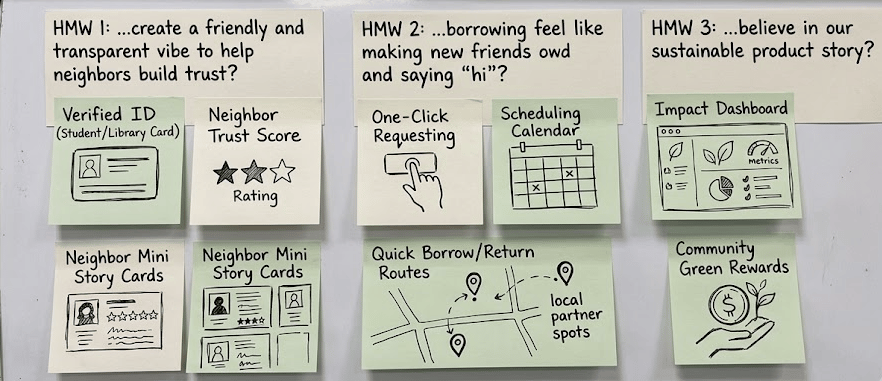
HMW create a friendly and transparent vibe to help neighbors build trust?
2.
HMW make borrowing feel like making new friends and saying "hi"?
3.
HMW encourage people to believe in our sustainable product story?
04.
Develop — From ideas to structure
Ideation
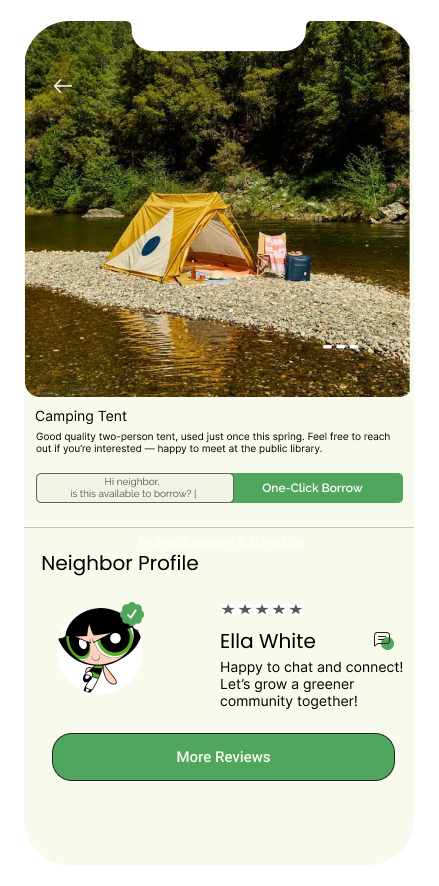
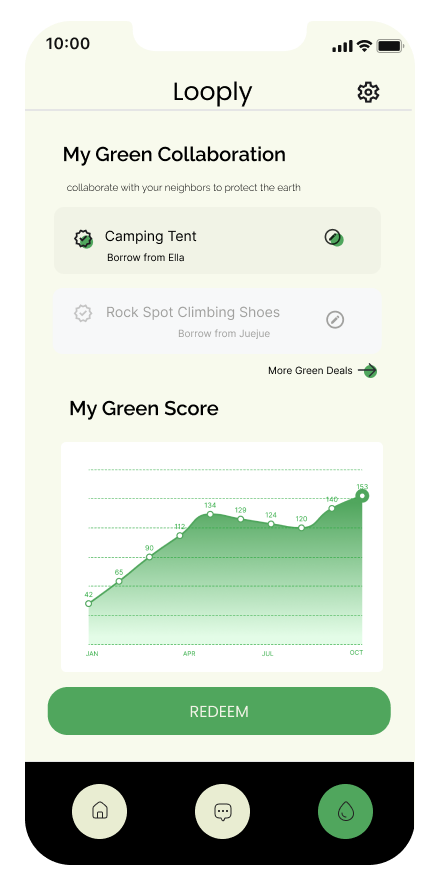
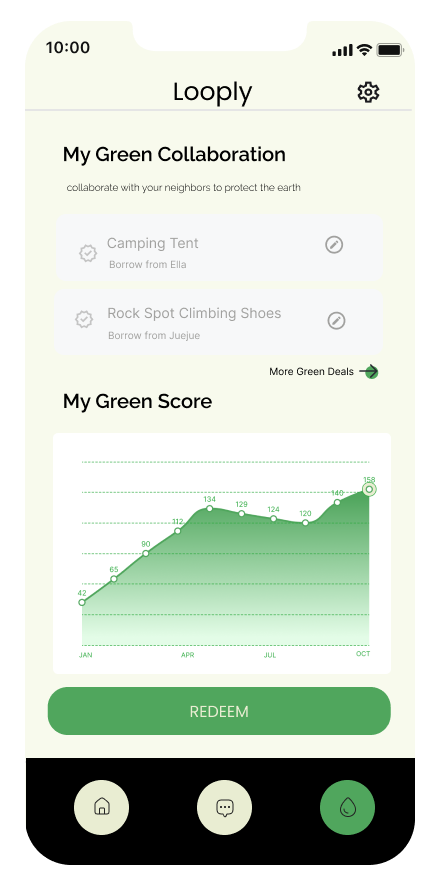
I brainstormed against each HMW, then clustered ideas by impact and feasibility. Key directions: verified identity (student ID, library card), trust score based on reviews, neighbor mini story cards, one-click requesting with simple scheduling, quick borrow/return routes with local partner spots, an impact dashboard, and community green rewards.
Concept
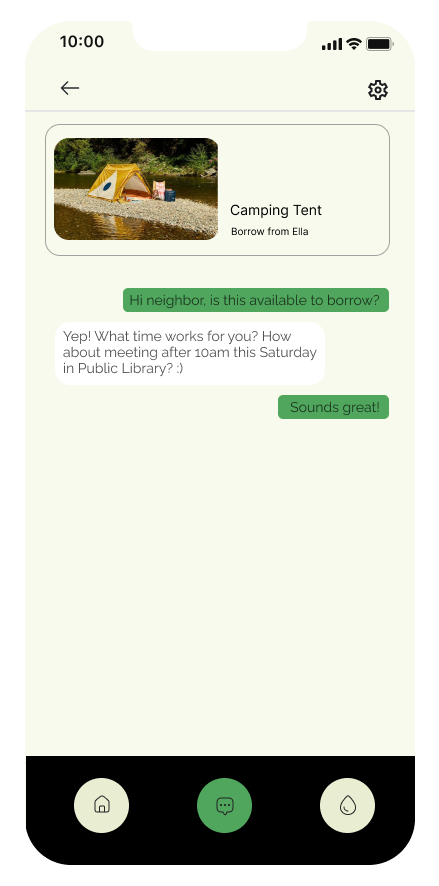
Co-create a green community — make negotiation feel like collaboration.
User Flow
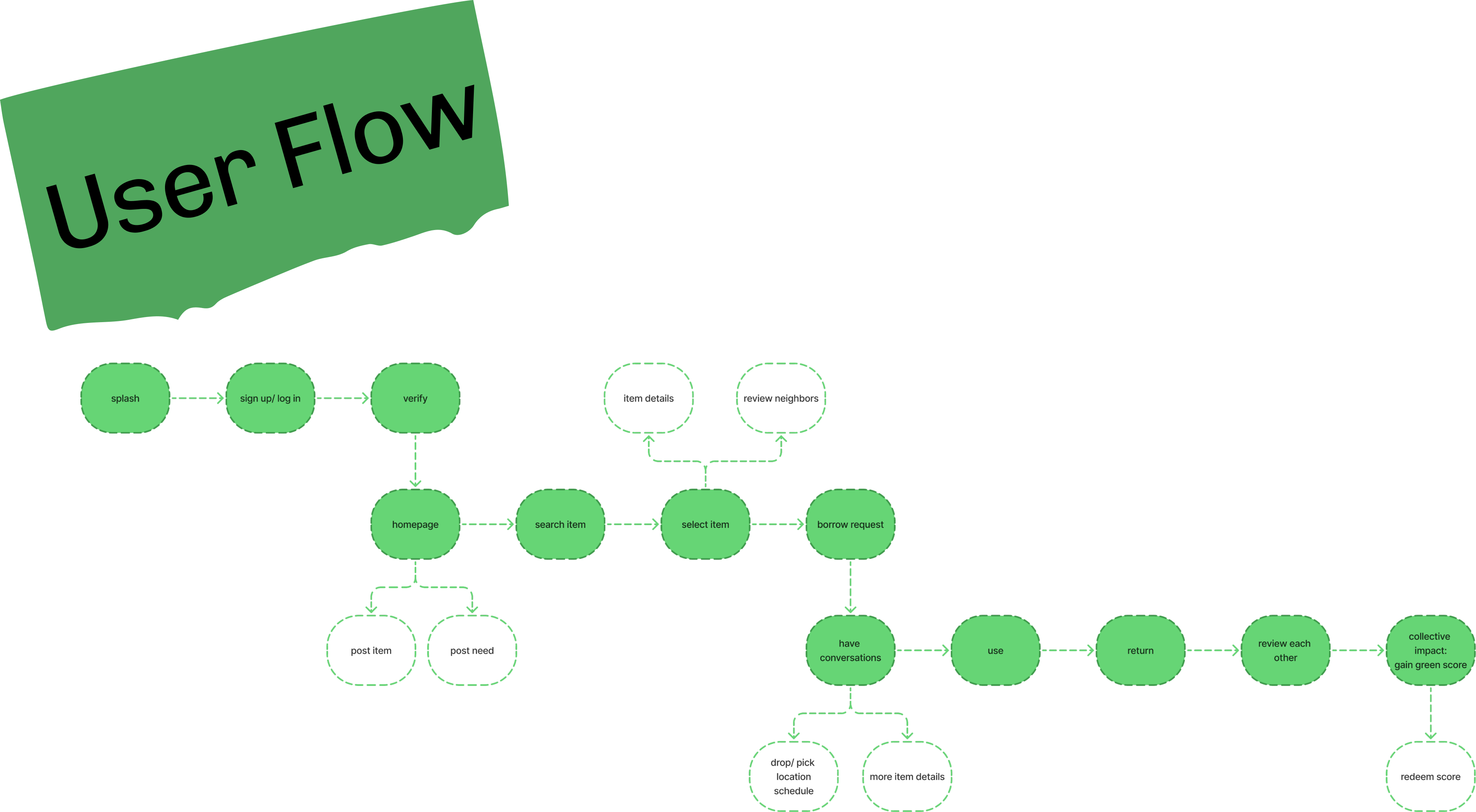
The flow connects verification, search, conversation and return into one loop that ends with shared impact (green score) instead of a dead-end transaction.
Wireframes
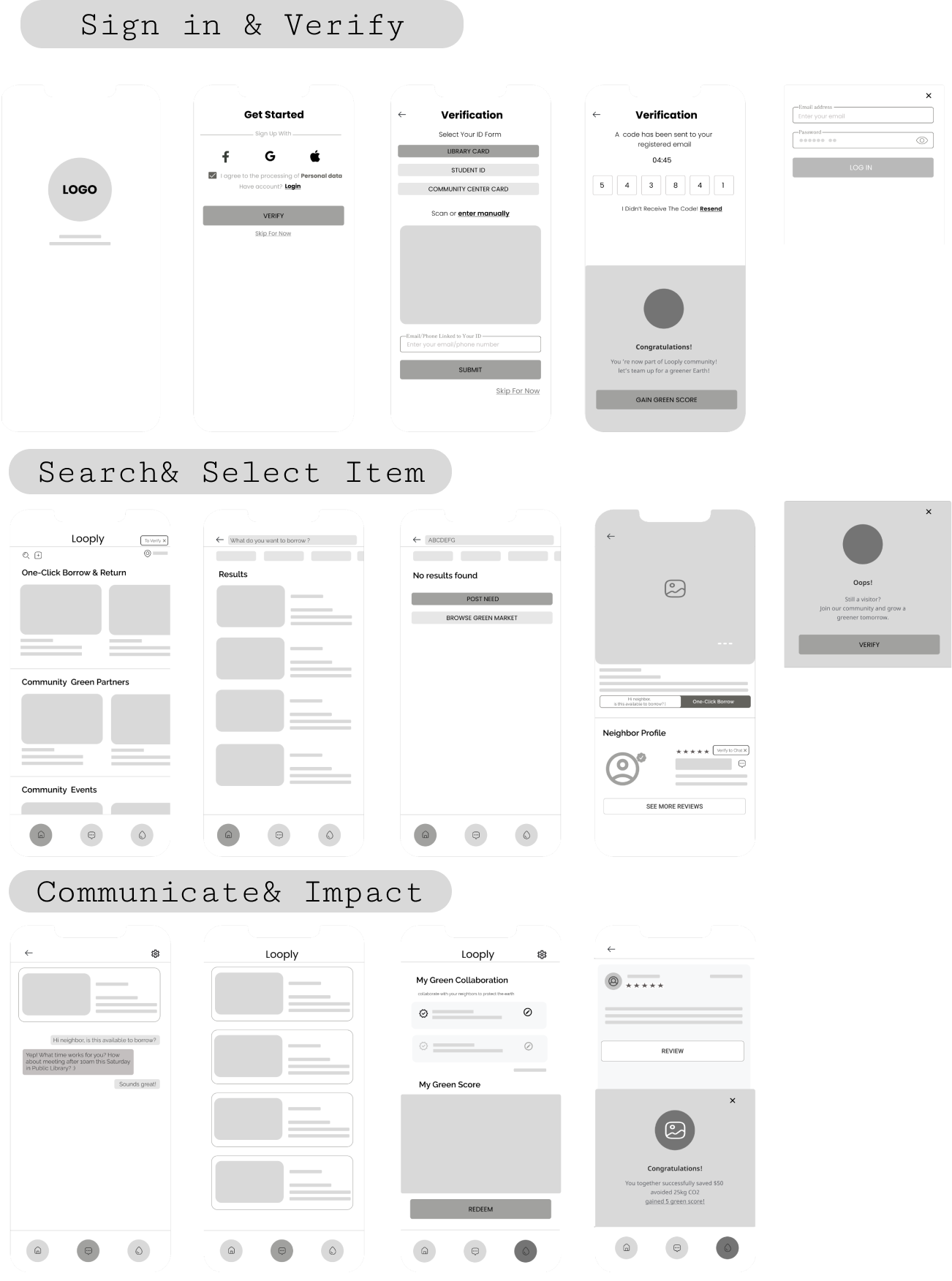
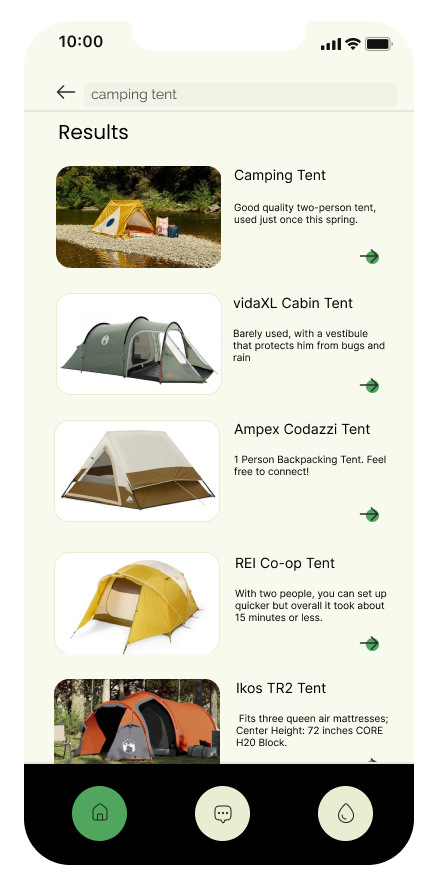
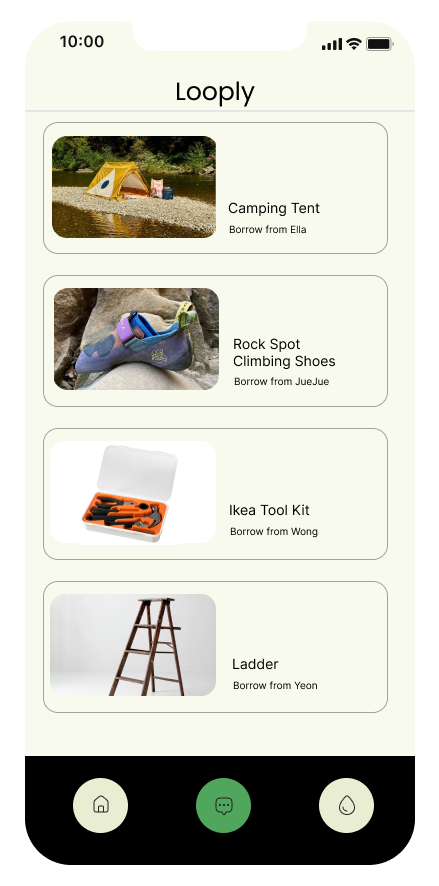
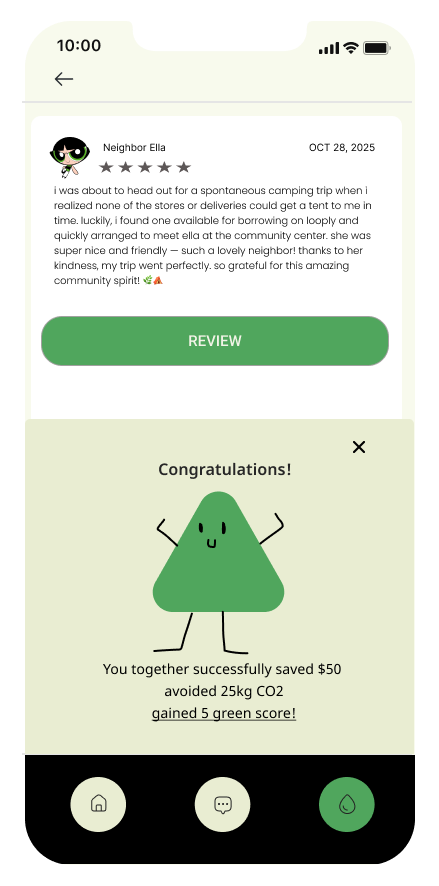
Low-fidelity wireframes tested three key moments: sign in & verify, search & select item, communicate & impact.
05.
Design — A system that feels like a friendly neighbor
Design system
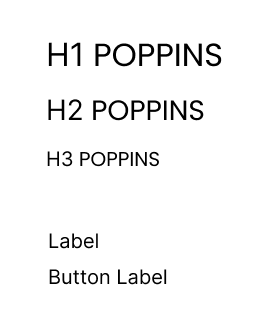
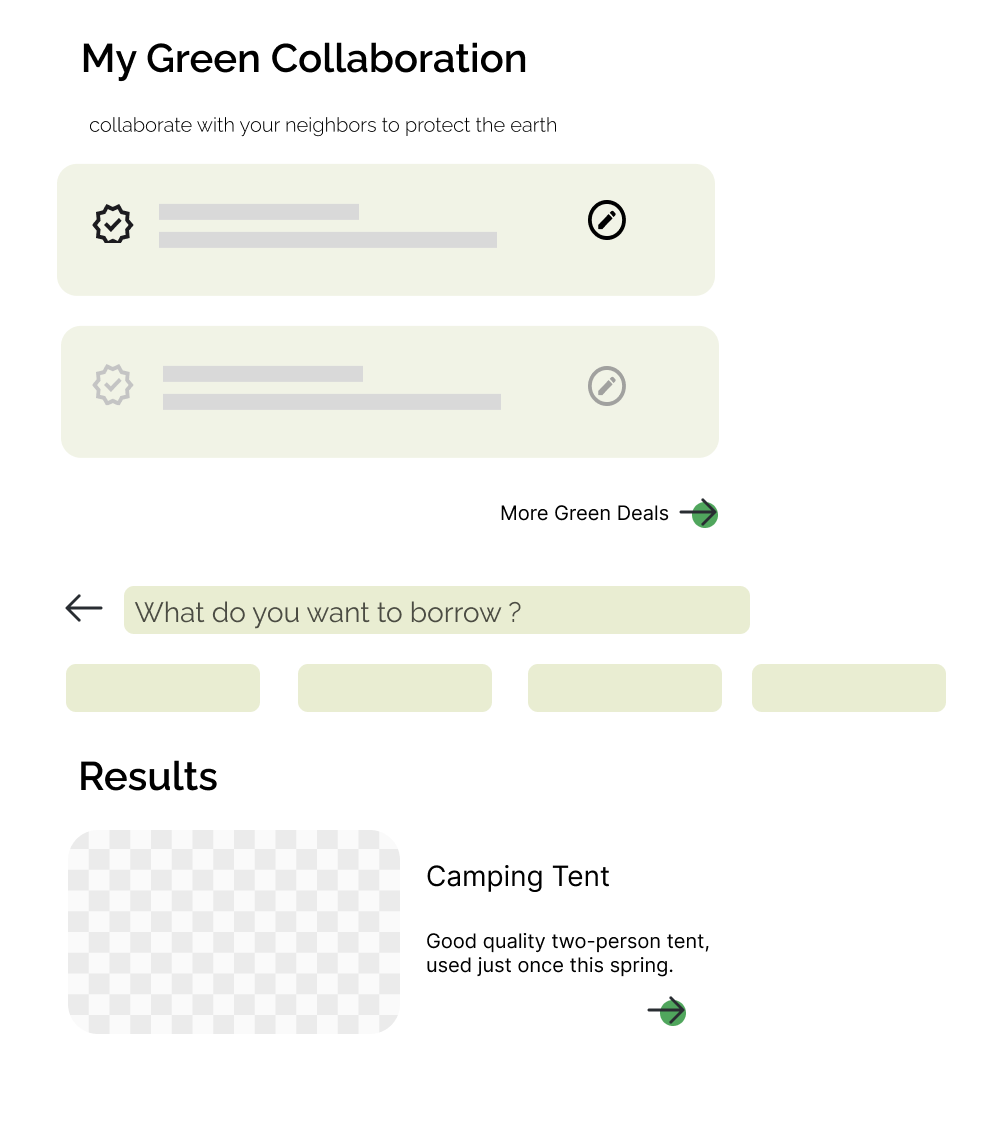
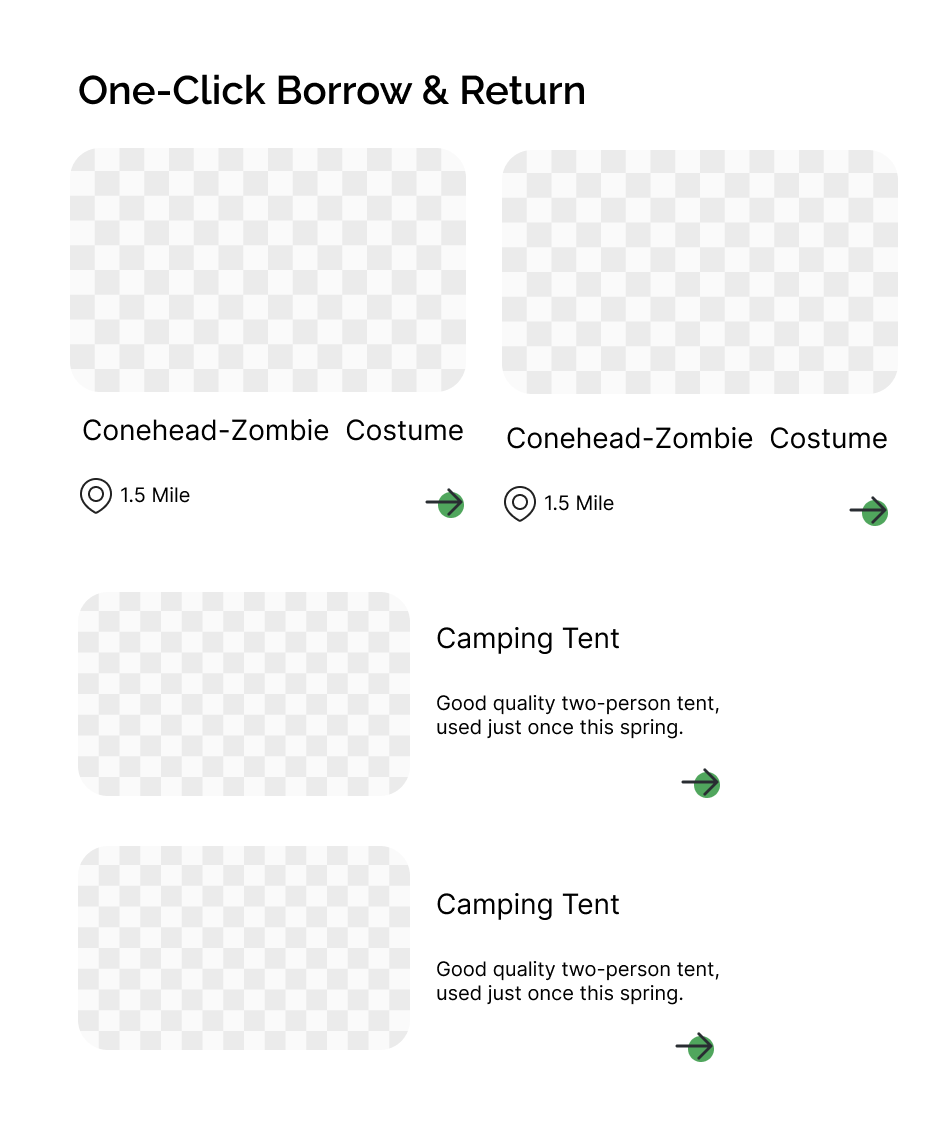
Atoms-to-templates component structure (atomic design), Poppins type family, a warm green palette, and a mascot that makes the brand approachable.
Style

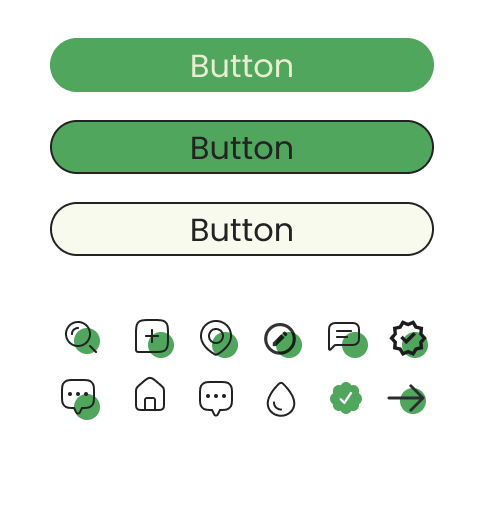
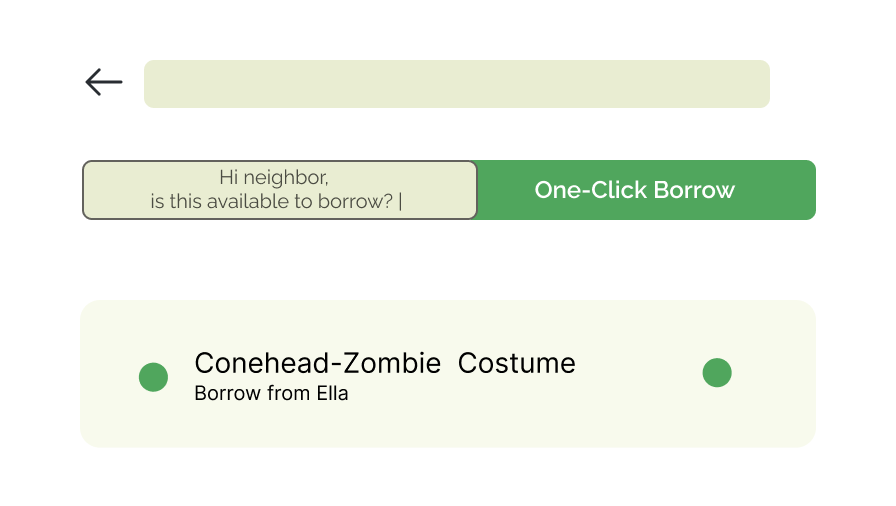
Atoms
Organisms
Templates
Molecules
Final design
06.
Reflection
Turning negotiation into collaboration — framing every exchange as a shared act rather than a transaction — was the design move that made the experience feel different from existing sharing platforms. Making impact measurable gave users a reason to come back. What I would test next: a real pilot with a local library or community center; how the trust score behaves at larger scale; and whether the green rewards genuinely shift behavior or just reward people who were already going to borrow.
AI in my workflow
[Fill with real examples of how AI tools were used in this project and where human design judgment stayed in control.]

